Thursday, August 17, 2023


Welcome to our Northern Louisiana Supporters

Celebrating Twenty years of finding, registering and promoting the stewardship of Louisiana cypress alive at the time of the Louisiana Purchase-- "Alive in 1803"

The Louisiana Purchase Cypress Legacy is proud to be an underwriter in August and September of Kelby Ouchley's "Bayou Diversity" editions, as heard Mondays, Tuesdays and Thursdays on KEDM radio, Monroe. Amidst the natural beauty of the KEDM listening area  are many remaining old growth cypress scattered throughout the region.
Kelby's perspective on these venerable  denizens of the lakes and bayous of northern Louisiana is quoted below, complimented by photos illustrating his impressions of these century old cypress:

C:\Documents and Settings\Owner\Desktop\2012_03_01\cypress 3_NEW.jpg


“Most cypress stands today are second growth, but there still remain

a few giants among us.  They exist because they are hollow and thus

not merchantable or because they grow in an area so remote as to make

harvest unfeasible.  They tower one hundred feet above the earth and

laid down their first annular rings during the classical period of the Mayan culture…….


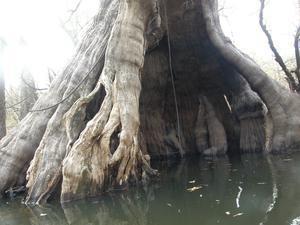
Bear Bayou,  St. Mary Parish


…..They germinated and grew into seedling as Charlemagne was crowned Holy Roman emperor.

They were sound and mature when the sun gleamed from the swords of Hernando DeSoto’s men

as they marched across northeast Louisiana in a fruitless search for gold……
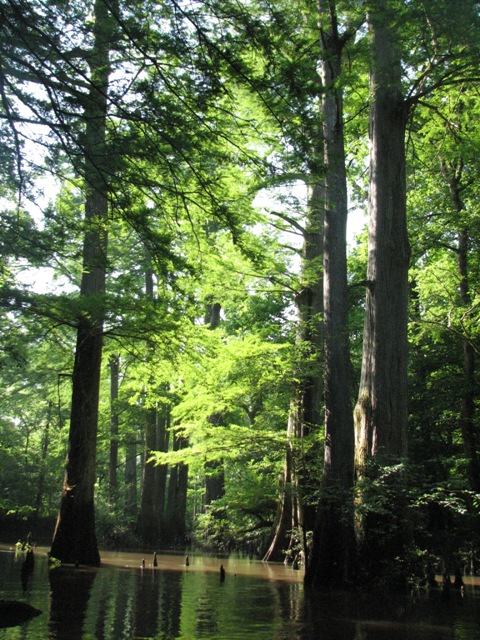


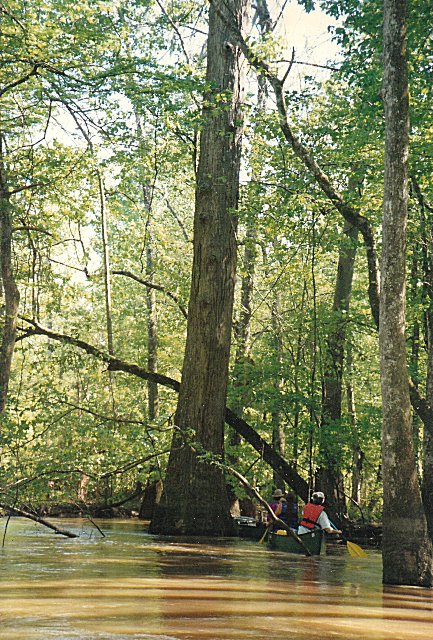
Bayou Chemin- A-Haute, Morehouse Parish


…..It is possible that their limbs were once laden with the weight of a thousand

passenger pigeons and that their bark was probed by ivory-billed woodpeckers. 

Cougars and bears may have sought refuge in their hollows.  It is likely that

a few of these will still be greeting each spring with a fresh feathering of needle-like

leaves in centuries to come”     Kelby Ouchley


                                                         *****************         

                  Exploring Old Growth Cypress in Northern Louisiana


The KEDM listening area includes lakes, bayous and wetlands where you can discover some

of the finest old growth cypress in Louisiana. Getting out and exploring these centuries old

cypress is will help spread the word that old growth cypress is worth protecting.

Perhaps none is better known in this region than the the "Castle Tree" located in Chemin-a-Haute

State Park. The Bayou Chapter of the Ozark Society has led paddling trips to view this amazing

tree, as well as trips to view other LPCL landmarked trees


        Castle Tree, Bayou Chemin-a-Haute, Morehouse Parish, courtesy of Ozark Society, Bayou Chapter

The Bastrop Daily Enterprise reported on the LPCL's landmarking of this tree in 2012:

Location of  "Castle Tree"  in Chemin a Haut State Park, Morehouse Parish


Louisiana Purchase Cypress Legacy coordinator Harvey Stern
Right took core samples from the largest cypress tree in Chem-A-Haut
Creek with assistance from Chem-A-Haut State Park Manager
Russ Brantlay


Largest cypress in parish gets recognition

By Wes Helbling
Posted Mar 06, 2012 @ 11:30 AM
Last update Mar 13, 2012 @ 01:37 PM


BASTROP —

Harvey Stern came to Morehouse Parish over the weekend to see a castle that predates the state of Louisiana, possibly by centuries.

Stern, who is the coordinator of the Louisiana Purchase Cypress Legacy program, said he became interested in visiting Chemin-A-Haut Creek after finding a description of its “large, old-growth cypress” trees in a topographical map of Louisiana. “The Castle” he came to document is an approximately 20-foot-diameter cypress tree in the middle of the creek, with a hollow cavern large enough to paddle canoes and kayaks inside.

“It’s such a unique tree,” said Stern. “It’s exactly the kind we’re looking for – the kind that shows there’s still some old growth worth preserving in Louisiana.”

On Saturday, Chemin-A-Haut State Park Manager Russ Brantley and paddler Joe Rolfe of Oak Ridge took Stern to the Castle to measure its circumference and took core samples. He said it may take a few days for the samples to dry out so that a “guesstimate” can be made as to the tree’s age by comparing the number of rings to the Castle’s radius.

A tributary of Bayou Bartholomew, Chemin-A-Haut Creek was overlooked by the 19th timber industry and today boasts some of the oldest and largest cypress trees in Louisiana. Some of the most impressive trees have gained nicknames from local paddlers, such as twin-trunked “Jester” and the storm-felled “Blowdown.”

Stern said high water in the creek, and the tree’s hollow buttress, posed special challenges for Saturday’s attempt to determine the Castle’s age. However, its enormous girth was enough for Stern to present Brantley with a plaque that will be affixed to the Castle, designating it as the sixth tree in Louisiana that was “Alive in 1812,” the year of Louisiana’s statehood.

“Based on other trees I’ve cored, I have a pretty good idea it’s several centuries old,” he said. “It’s old enough to be a [Louisiana] Bicentennial tree. The question is, how many centuries do you add to that?”

Other cypress trees that will be included in the Bicentennial project are located in Tickfaw State Park, Jean Lafitte National Park and sites in Plaquemines and Webster parishes.

A number of ancient cypress trees have already been designated throughout the state by the Legacy program, which marks trees that were living at the time of the Louisiana Purchase in 1803. Recently, a tree examined in Washington Parish was found to be roughly 800 years old. The largest bald cypress in the U.S., with a 53-foot circumference, is located in Louisiana’s Cat Island National Wildlife Refuge.

Stern said he has previously designated a cypress tree in Morehouse Parish, closer to the Arkansas line, that is believed to be “well over 500 years old.” This tree is located in what “as beautiful a stand of old-growth cypress as I’ve seen anywhere in the state. You can’t get a bass boat through that part of the bayou because the trees are so thick.”

Stern said formal recognition of the Castle may also enhance state and local projects to establish and promote paddle trails in both Bartholomew and Chemin-A-Haut. Based on a visit to Morehouse Parish last fall, river guide John Ruskey notes the cypress trees “monolithically reaching to the sky” in his paddle guide to Chemin-A-Haut Creek.

Ruskey writes, “Trees this big are at least 1,000 years old … They saw Hernando de Soto, La Salle, the rise of the French Empire and the sale of the Louisiana Purchase. They lived through the birth of the American West, the Civil and the Industrial Age. If not logged or submerged they will outlive us all ...”

When Stern has determined an estimated age for the Castle based on the core samples, its location and data will be catalogued on the LPCL Web site (www.lapurchasecypresslegacy.blogspot.com)

Plans are also in the works for a Web site dedicated to the “Alive in 1812” Bicentennial trees.


Excepted from the LPCL registry of the largest/oldest known cypress in each Louisiana Parish ( https://docs.google.com/document/d/1RVOgpa5-6QAftT54oOYcsfRNfduSIn_O9n7EnR9lKWU/edit)
is a summary of our findings regarding this amazing tree

Parish

GPS/ Map

Photo

Circumference

Core Length/ Rings Counted

Estimated Age

Notes


Morehouse Parish


32.91091N, -91.83083W

click here for map


Approx 25 ft

1st: 1.8”

Approx rings:102 2nd: 1.8”

Approx rings: 81

3rd: 1”

Rings:27

1200+ yrs

In Bayou Chemin a Haute, Chemin A Haute State Park (“Castle Tree”)


The Bayou Chapter of the Ozark Society ( https://www.ozarksociety.net/chapters/bayou/)has led paddling trips to view this amazing tree, as well as to several other Northern Louisiana locations  where old growth cypress is found, and where the LPCL has placed plaques on particularly remarkable trees over 220 years old, such as the "Zac Burson" tree
on Bayou Bodcau in Bossier Parish.

The "Zac Burson" Tree-- Plaque #26, Bodcau Bayou, Bossier Parish

While individual old growth cypress of impressive size and age make great destination points for paddling trips in Northern Louisiana, we wish to emphasize that many sections of the North Louisiana Bayous such as Bayou De L'outre, Chemin a Haute , Dorcheat, Bodcau, Batholomew contain groves of old growth cypress likely well over 200 years old, based on LPCL borings of similar sized trees in the area:
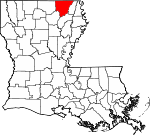
Bayou Chemin a Haute between Hwy 590 and the Arkansas State Line in Morehouse Parish

***********

Louisiana Delta Adventures

An excellent source of paddling adventures into old growth cypress locations in Northern and Central Louisiana can be found  athttps://www.louisianadeltaadventures.com/things-to-do/paddling/ , which has several on-line brochures of paddling trails into areas including Bayou Bartholomew, D'Arbonne Country, and the Tensas River-- to name a few. Among recommended excursions into what is called a "primordial [cypress] paradise" is the Corney Creek Trail described in the D'Arbonne  Country Water Trails Brochure.

                                                                        ************


Kelby Ouchley, in his long-running Bayou Diversity episodes, often illustrates the symbiotic connection between the critters in his anecdotes and the sloughs, bayous, and forested they inhabit.
Among the individuals who has contacted the La Purchase Cypress Legacy over the past twenty years is Ben Grizzle, turtle ecologist, who sent us the following photo of a likely LPCL candidate (220+ years old) in the Upper Ouachita National Wildlife Refuge in Union Parish. 


Mr. Grizzle has kindly contributed an excellent summary of his research in Northern Louisiana regarding the symbiotic interplay of the alligator snapping turtle and other endemic turtles to the mature cypress ecosystems they have traditionally inhabited. We are happy to include his research findings below:


Chelonians of the Southern Wilds:

The Importance of Turtles to the Conservation of Cypress Ecosystems


Ben Grizzle


Cypress brake in Caldwell Parish--habitat of the Alligator snapping turtle


Turtles are among the most endangered groups of vertebrate animals on Earth.  The IUCN estimates that 60% of global turtle species are threatened, endangered, or have gone extinct in modern times.  The American South is home to an exceptionally rich assemblage of turtle species, one that is rivaled in its diversity only by the Ganges basin of southern Asia.  Some 45 species occur in this region, due in large part to the incredible diversity of its rivers and wetland habitats.  Historically, many of these species thrived in the vast swaths of old-growth Cypress and Tupelo forest that dominated the Southern lowlands.  The roles they play in these ecosystems are both complex and critically important.


Cypress grove in an impoundment in Union Parish. The permanent flooding of this formerly seasonal wetland will likely have a negative impact on recruitment of Cypress seedlings.


One of the most basic and essential roles turtles play in Cypress bottomlands is that of primary, secondary, and even tertiary consumers.  Perhaps the most famous chelonian inhabitant of these wetlands is the Alligator Snapping Turtle (Macrochelys temminckii and suwanniensis).  These prehistoric predators can grow to well over 100 pounds and live for more than a century.  They are well known as sit-and-wait predators of fish, mammals, and even other turtles, sitting in the mud and using the bright-colored lure on their tongue to attract their unwitting prey.  However, this role as an apex predator is only part of their contribution to the ecosystem.  Studies of stomach contents and fecal matter have revealed Alligator Snappers to be prolific scavengers of carrion, with many feeding on dead fish, deer, and feral hogs.  Even more noteworthy is the frequency with which they are found to have ingested vegetation.  In one study of Alligator Snappers from Arkansas and Louisiana, vegetative matter was found in the digestive tracts of 108 of the 109 turtles examined.  While some of the vegetation may have been ingested accidentally, the abundance of acorns and Tupelo fruit suggests that Alligator Snappers seek out both hard and soft mast as food.  In this way, Alligator Snappers may even act as seed dispersers.  Anecdotally, I have observed Alligator Snappers in the fall with oily black stains on their beaks and inside their mouths.  This discoloration could very well be the result of foraging on tannin-rich acorns.


Large male Alligator Snapper displaying tannin stains (Ouachita Parish)


It isn’t just the large turtles that play important roles either.  Anyone familiar with the swamps of the deep south knows that the base of the food chain is dominated by one group of invertebrates: crayfish.  In shallow, seasonally flooded Cypress forests, turtles are among the top consumers of these freshwater crustaceans.  Mud Turtles (Kinosternon spp.), Musk Turtles (Sternotherus odoratus), Sliders (Trachemys scripta), and Common Snapping Turtles (Chelydra serpentina) are important consumers of crayfish and other invertebrates, providing a regulatory force on their populations.  The presence of a healthy population of these secondary consumers is also a major driver of nutrient cycling, which can be crucial in the nutrient-poor conditions of a Cypress swamp.  The presence of omnivorous turtles has also been experimentally demonstrated to alter environmental characteristics such as pH and sedimentation in positive ways.


Mississippi Mud Turtle (Union Parish)


The relationship between turtles and Cypress wetlands goes both ways.  Cypress forest is a critical habitat for several threatened turtle species, such as the aforementioned Alligator Snapping Turtle, Alabama Red-bellied Turtles (Pseudemys alabamensis), Chicken Turtles (Deirochelys reticularia), and Spotted Turtles (Clemmys guttata).  These species heavily utilize both permanently and ephemerally flooded Cypress forests in the southeast.


Unfortunately, much like the turtles that inhabit them, these forests have become endangered.  Because of their deep interconnectedness, the conservation of Cypress forests and freshwater turtles is inextricably linked.  The threats they face are virtually identical.  Overexploitation by humans, development, alterations in hydrology, and invasive species are the major threats facing both turtles and their habitat today.  Conservation of both is a complex issue, with dozens of confounding factors that must be considered in any strategy moving forward.  One dire concept that applies to both turtles and Cypress trees is that of extinction debt.  In species with slow growth rates and long generation times (i.e. Alligator Snapping Turtles and Bald Cypress trees), the persistence of many mature organisms on the landscape is not necessarily an indicator of a healthy population.  Because these species take several years to reach reproductive age and produce few viable offspring even under the best conditions, deficiencies in recruitment and reproduction can take decades to manifest in any obvious way, by which time a collapse in the population may be unavoidable.  For both species, alterations in hydrology and invasion by exotic species such as fire ants, feral hogs, and Chinese Tallow trees are the main culprits behind these losses in recruitment.


In all, turtles are some of the most important animal residents of the Southeastern Cypress forests.  Their contributions to the ecology of these habitats, as well as their reliance on them, have played out over millions of years.  Today, they both face the greatest threats in their respective histories, and to save one we must necessarily save the other.  There is hope, as extensive ecological restoration programs are currently being undertaken across the Southeast.  However, it is only with the support and understanding of the general public that these magnificent ecosystems and their unique inhabitants will be able to persist for generations to come.


Mississippi Map Turtle (Graptemys pseudogeographica kohni basking on the buttress of a Cypress in Ouachita Parish


References and Further Reading

Lovich JE, Ennen JR, Agha M, & Gibbons JW. 2018. “Where Have All the Turtles Gone, and Why Does it Matter?” BioScience 68:771-781.

Elsey RM. 2006. “Food Habits of Macrochelys temminckii (Alligator Snapping Turtle) from Arkansas and Louisiana.” Southeastern Naturalist 5:443-452

Ernst CH, Lovich JE. 2009. “Turtles of the United States and Canada.” Baltimore: JHU Press. 827pp.


Thursday, July 6, 2023

Majestic Cypress Registered in Pointe Coupee Parish


 It's taken us twenty years to find a worthy candidate in Pointe Coupe Parish, but we're happy to have found this splendid old cypress on the property of Bobby and Theresa Moniotte on Chenal Road in the False River vicinity southeast of New Roads. The location, cultural and natural heritage, and owner stewardship of this cypress testifies to the rewards of twenty years of documenting cypress "Alive in 1803" throughout Louisiana.

Here are the statistics on this tree:

Circumference:15'11"    GPS: N 30 38.658  W 91 20.986

On the first boring of 5.5 inches I counted about 56 yearly growth rings, which projects to about 305 total rings.
On the second boring of 13.25 inches I counted about 151 yearly growth rings, which projects to 341  total rings.
My conservative age estimate of 260-280 years is based on the likely faster growth of the tree in its early growth years, which doesn't show up in the later years borings.

 This grand old cypress has its origins during the Spanish Land Grant period in the 1700’s, when Bobby’s French/Acadian ancestors settled on the site that includes the current Moniotte homestead. The tree originally bordered Grand Bay, which formerly flowed into the nearby  Mississippi River; as late as the 1930’s Bobbie’s father recounted that he remembered as a boy  jumping from this tree’s branches directly into Grand Bay. With drainage of the surrounding area for agriculture, the cypress is now about 200 feet from Grand Bay.(see map below) Its current position on dry land away from Grand Bay has not appeared to have affected its overall slow growth rate since the 18th century. Bobby’s father also recounted much later in life that the tree appeared to be the same size he remembered from his boyhood


The La Purchase Cypress Legacy is proud to award the Moniottes  LPCL Plaque #82-- with its healthy, full canopy and three strong limbs rising vertically from the trunk, this beauty is sure to be landmark along Chenall Road for generations to come. And kudos to the Moniotte for planting more young cypress nearby on their property-- when these younger trees reach maturity in the decades to come they likely will be in the company of the grand old "Moniotte" cypress.

There may well be older cypress than this one in Pointe Coupee Parish.  Let us know if you think you've  found one! We're still looking for candidate (Alive in 1803) cypress in the following parishes

Allen, Beauregard, Caddo, Calcasieu, Caldwell, Cameron, Claiborne, E. Feliciana, Evangeline, Franklin, Jackson, Jefferson Davis, Lincoln, Madison, Ouachita, Pointe Coupee, Red River, Sabine, St. Bernard, St. Helena, Vermillion, Vernon, W Baton Rouge, West Carrol

Contact us at LaPurchaseCypressLegacy@gmail.com or 504-452-8281

Wednesday, April 19, 2023


Louisiana Purchase Cypress Legacy Celebrates Twenty Years of Discovering , Registering and Promoting the Stewardship of Louisiana's Old Growth Cypress-- Trees Alive at the time of the Louisiana Purchase in 1803


******************************

 Click here for a link to a current registry of the Parishes for which LPCL landmarked trees have been identified .

This register contains GPS locations and projected age of Louisiana Purchase Cypress Legacy trees ("Alive in 1803") in about two thirds of Louisiana's Parishes. Parishes for which we are still seeking cypress at least 220 years old are:


Allen, Beauregard, Caddo, Calcasieu, Caldwell, Cameron, Claiborne, E. Feliciana, Evangeline, Franklin, Jackson, Jefferson Davis, Lincoln, Madison, Ouachita, Pointe Coupee, Red River, Sabine, St. Bernard, St. Helena, Vermillion, Vernon, W Baton Rouge, West Carrol

Any informationabout locations and access to possible candidates in these Parishes would be much appreciated. Contact Harvey Stern at LaPurchaseCypressLegacy@gmail.com or at 504-452-8281


                                                                   *****************************

For an introductory powerpoint presentation on the Louisiana Purchase Cypress Legacy, click here(updated January 24, 2023) 

                                                   ***********************************

(Heart of Louisiana: Legacy Cypress

Tuesday, August 22nd 2017, 8:57 pm CDT

 WVUE_20151110231226737AA.mp4-- Click for Video of story posted below:


FOX 8 photo
NEW ORLEANS, LA (WVUE) -
If you want to find the oldest cypress trees in Louisiana, you'll probably need to hike through woods or wade through a swamp. This is where the ancient trees have thrived for thousands of years, until a century of logging wiped out virgin cypress forests.
"We got a registry for the live oak trees but we haven't done much with these beautiful old cypress that we see pretty much representing this and it is the official state tree after all," said Harvey Stern with the Legacy Cypress Project.
Stern is a man on a mission. The former New Orleans City Planner wants to find the biggest cypress trees in each Louisiana parish. 
"We know about the coastal cypress and the threats that they are under, but some of the most beautiful pockets of old growth cypress are up in north Louisiana, northeast Louisiana," said Stern. 
In fact the country's largest tree of any type east of California is a bald cypress tree near St. Francisville, Louisiana. 
The base of the cypress tree is massive. It's 17 feet in diameter. That's the size of a lot of home living rooms. The champion tree is believed to be 1500 years old. It's part of the Cat Island National Wildlife Refuge. Terry Matherne found a large tree on his property near the Amite River in Ascension Parish. 
"I'd like to know what it was like. When all of them trees like we are going to see were everywhere in here," said Matherne. 
After eight years on the property, Matherne discovered the giant tree. 
"Wow," said Matherne. "I didn't think there is anything that big still in here. I wouldn't doubt there are still some more. Later on when I get time, I'm going to walk some more in here." 
First a tape measure is stretched around the tree to measure its circumference. 
"Twenty-one feet, nine inches," said Stern. 
Then using a hand drill, Stern pierces the bark and digs toward the center of the tree. He pulls out a core sample, with rings that mark every year of the tree's life. 
"But if you see where my thumb is pointing here, you should be able to see some of those darker colored marks on there," said Stern as he pointed down at the tree. 
Stern counts 100 rings in a sample nearly three inches long. 
"Simply counting the rings and extrapolating based on the size of the coring," said Stern. 
Based on that, Stern estimates that the cypress is 700 to 1,000 years old. That earns the tree a plaque, as a legacy cypress tree, Sterns designation for any tree that was here at the time of the Louisiana Purchase, more that 200 years ago. 
"I think we should care for anything that has survived the centuries, going back in many cases 1000 years, 1500 years, I'm finding in some cases," said Stern. 
And these old trees give us a hint of what Louisiana looked like, when forests were crowded with these cypress giants. 
The Legacy Cypress Project depends on landowners to send in information on large trees. So far, they've found 200-year-old cypress in one-third of Louisiana's parishes. For more information, click here and here.  
Copyright 2017 WVUE. All rights reserved.


**********************************
For an introductory powerpoint presentation on the Louisiana Purchase Cypress Legacy, click here(updated January 24, 2023) 


***************************************

The La Purchase Cypress Legacy as part of its 2oth anniversary celebration will be highlighting canoe or kayaak accessible locations around Louisiana (including walk-to sites) where old growth cypress can be viewed. One of our favorite spots is King George Bayou near French Settlement in Livingston Parish. Reposted below from an earlier Blog entry is more information about this beautiful, remote bayou and the old growth cypress that line its banks:

Plentiful Old Growth Cypress along King George Bayou in Livingston Parish


We've received many requests since we began the La Purchase Cypress campaign in 2003 for areas where one can visit several large old cypress in one accessible location. In addition to responding to individual requests. we'll be periodically showcasing on this blogsite locales worth exploring for old growth cypress. The map link below shows sites of several cypress well over the 220 year threshold for inclusion of Louisiana trees in the LPCL inventory:


(Note that the map incorrectly labels King George Bayou as the Amite River-- King George Bayou does slowly flow into the Amite) Click on markers for GPS locations of these trees. Marker ID 76QR+8P is the location of a 16'11" circumference cypress from which a boring revealed extremely closely spaced rings--projected age: well over 500 years old. The map also shows the location of the largest and oldest known cypress along King George Bayou (LPCL Plaque #46), having a 21 foot circumference and a projected age of 1100+ years.

Access for canoe or kayak paddlers is at the end of King George "Bay" Road, which is off Hwy. 444 near French Settlement.

Fortunately for the  enduring survival of these primeval trees, much of King George Bayou was recently added to the State's Maurepas Swamp Wildlife Management Area


******************


Tuesday, March 14, 2023

20th Anniversary La. Purchase Cypress Legacy exhibit at Tulane Environmental Law Summit March 17th and 18th

 The Louisiana Purchase Cypress Legacy will kicking off it's 20th year anniversary celebration on March 17th and 18th at the 28th Tulane Environmental Law and Policy Summit at The Tulane University Law School at Tulane University, Weinmann Hall , 6329 Freret Street, New Orleans. This is a free event and will be both in person and via Zoom. This year's Summit promises to be especially rewarding with its theme of "Unconventional Voices". Water quality and water management  issues in Louisiana  are integral to the stewardship of old growth cypress in Louisiana, and this year's Summit is going to feature these issues from the perspective of  stakeholders not often included in water policy issues. I'll be attending the Friday March 17th 12 noon session panel discussion on "Exploring Tribal Law Approaches to Environmental Stewardship and Regulations within Federal Law"

Information on Summit sessions and registration (free)  can be found at:

https://tulaneenvironmentallawsummit.com/

Several speakers and sponsoring organizations at the Summit have been key allies throughout  our twenty year campaign to identify, register and promote the conservation of old growth cypress in Louisiana. If you can attend, stop by our LPCL display-- we look forward to reconnecting with old friends and meeting new ones!  We'll have new brochures available, which can be viewed below.